Best Deal on Smart Meters – Save Energy & Money Today!

-
Contact
-
Email
Best Deal on Smart Meters – Save Energy & Money Today!

21 Oct 2026 IPDS
Nobody walks into an electrical supplier and confidently asks for the right meter. Most people either go with whatever their electrician recommends, pick whatever their neighbour installed, or just accept whatever the utility board sends over.
And for a lot of situations, that works out fine. But for plenty of others, it does not. The wrong meter type leads to inaccurate readings, compliance issues, or a setup that simply cannot handle the actual electrical load of the property.
The good news is that the decision between a single phase meter and a 3 phase meter is not complicated once you understand what each one actually does and who it is genuinely built for.
Before comparing the two meter types, it helps to understand what a phase actually means in an electrical context.
Electricity is delivered to properties through alternating current, which flows in waves. A single phase supply delivers one wave of current. A three phase supply delivers three waves simultaneously, offset from each other, which allows it to carry significantly more power at any given moment.
Think of it this way. A single phase supply is a single lane road. Perfectly adequate for light traffic. A three phase supply is a three lane highway. Built for volume, built for load, built for situations where a single lane would create a bottleneck.
Your meter measures what flows through that supply. A single phase meter measures one lane. A 3 phase meter measures all three.
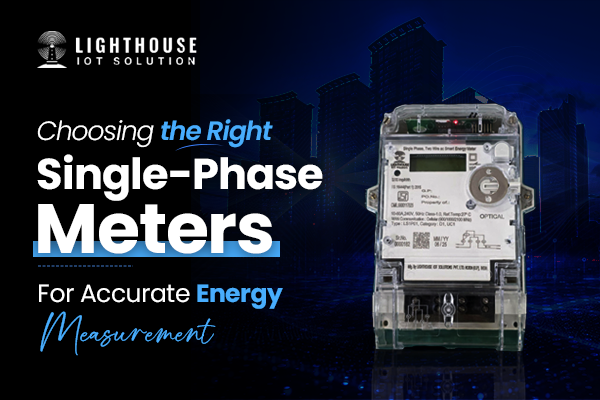
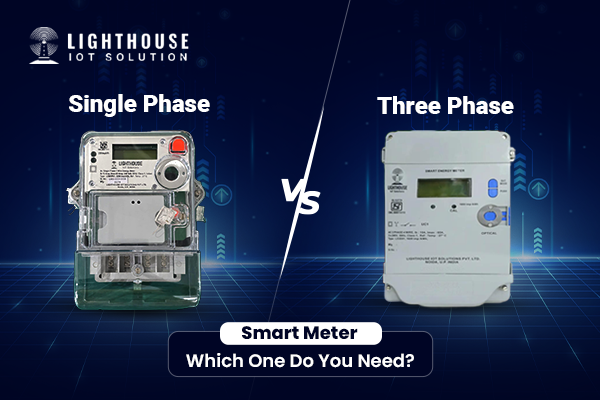
A single phase meter is the standard electricity meter for the vast majority of Indian homes, flats, small offices, and retail shops. If you live in an apartment, run a small business from a shopfront, or operate a compact workspace, this is almost certainly what you already have installed.
And for most of those situations, it is exactly the right choice.
A single phase energy meter measures consumption on a single phase supply accurately and reliably. Modern versions come with digital displays, tamper detection, anti theft features, and BIS certification for utility board approval. They are straightforward to install, cost-effective, and more than capable of handling the electrical demands of standard residential and light commercial use.
The typical appliances running on a single-phase supply, such as lights, fans, televisions, refrigerators, air conditioners, and computers, sit comfortably within the capacity a single-phase energy meter is designed to handle.
Where a single-phase meter starts to show its limits is when energy demands grow beyond what a single-phase supply can reliably deliver. That is where the conversation about three-phase metering begins.
A 3-phase meter is not an upgrade for upgrade’s sake. It is the right tool for a specific set of situations where the electrical load genuinely requires three-phase power.
A 3-phase energy meter measures electricity across all three live wires of a three-phase supply simultaneously. This makes it capable of handling significantly higher loads than any single-phase setup, and it does so while giving operators a complete picture of how energy is distributed across all three phases.
The properties and facilities that typically require a 3 phase meter include:
Factories and manufacturing plants where heavy machinery draws large and continuous electrical loads. A single-phase supply would be inadequate and potentially dangerous for this kind of demand.
Hospitals and healthcare facilities where multiple high-draw systems, operating theatres, imaging equipment, HVAC, and backup power all run simultaneously and need to be metered accurately.
Large commercial complexes, shopping malls, and office buildings where the combined load of dozens of units, common areas, elevators, and central systems exceeds single-phase capacity.
Agricultural pump connections, particularly larger irrigation systems, which draw the kind of sustained high load that three-phase power handles most efficiently.
Data centres and server rooms where continuous high power demand and load balancing across phases are critical to operational stability.
If your property falls into any of these categories, a 3-phase energy meter is not optional. It is the only metering solution that accurately captures your consumption and correctly supports your electrical infrastructure.
The most common mistake is assuming that a larger property automatically needs a 3-phase meter, or conversely, that a smaller property never will.
Property size is not the deciding factor. Electrical load is.
A large farmhouse running standard household appliances on a single-phase supply is perfectly served by a single-phase energy meter. A compact factory unit running industrial motors and welding equipment on a three-phase supply absolutely needs a 3 phase meter, regardless of how small the building footprint is.
The second common mistake is installing a single-phase meter on a three-phase connection or vice versa. This creates metering inaccuracies that either overcharge the consumer or underreport consumption to the utility, both of which cause problems eventually.
Always match the meter type to the supply type. If you are unsure which supply your property runs on, your electrician or utility provider can confirm it in minutes.
Yes, and in many cases you should.
Large residential complexes and commercial buildings often run a three-phase supply at the building level while individual units operate on single-phase connections. The practical solution here is a 3-phase energy meter at the main supply point to measure overall building consumption, combined with individual single-phase energy meters at each unit for accurate sub-metering and individual billing.
This combination gives property managers visibility at both the macro and micro level. Total building consumption is tracked through the 3-phase meter. Individual tenant consumption is tracked through each unit’s single-phase meter. Billing is accurate, accountability is clear, and disputes become a thing of the past.
For housing societies, apartment complexes, and multi-tenant commercial buildings, this layered approach is increasingly becoming the standard and for good reason.
Whether you go with a single-phase energy meter or a 3-phase energy meter, modern smart versions of both offer capabilities that go well beyond basic consumption recording.
Real-time data transmission means consumption is monitored continuously rather than read once a month. Remote access gives property managers and utility providers visibility without physical meter visits. Tamper detection flags interference immediately. Load profiling tracks consumption patterns over time, giving operators the data to make genuinely informed energy management decisions.
The smartest versions connect wirelessly to building management systems and energy platforms, fitting into a broader IoT monitoring infrastructure that covers the entire property portfolio from a single dashboard.
The choice between single-phase and three-phase is about matching the meter to the supply and the load. The choice to go smart is about getting real value from the data that meter generates every day.
The single-phase versus three-phase decision is simpler than most people think once you focus on the right question: what kind of electrical supply does your property run on and what load does it need to carry?
A single-phase meter is the right, reliable, and cost-effective solution for homes, small offices, and retail spaces running standard electrical loads. A 3-phase meter is the essential tool for industrial facilities, large commercial buildings, and any property where high power demand requires three-phase infrastructure.
Lighthouse IoT manufactures both single-phase energy meters and 3-phase energy meters to BIS-certified standards, built for Indian grid conditions and backed by reliable after-sales support. Whether you are metering a single flat or an entire industrial campus, they have the right solution for your supply type and your load.
Not sure which meter your property needs? Reach out to the Lighthouse IoT team today and get the right answer before installation, not after.
A single-phase meter measures electricity on one live wire, suitable for homes and small businesses. A 3 phase meter measures across three live wires, handling much higher loads for industrial and large commercial use.
Check your electrical supply type. A single-phase supply needs a single-phase meter. A three-phase supply needs a 3-phase meter. Your electrician or utility provider can confirm which applies to your property.
Yes, for individual units within a commercial building. The overall building supply may require a 3-phase meter, while each unit runs its own single-phase energy meter for sub-metering.
Neither is inherently more accurate than the other. A single-phase energy meter is highly accurate for single-phase loads. A 3-phase energy meter is accurate for three-phase loads. Using the wrong meter type for your supply is what creates inaccuracies, not the meter itself.
Only if your property’s electrical supply is upgraded to three-phase at the same time. The meter type must match the supply type, so a supply upgrade and a meter change happen together, not independently.